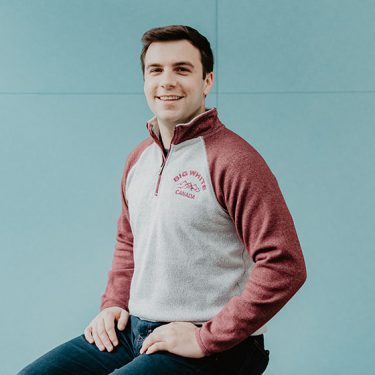
With a career built on navigating the unpredictable world of live broadcasting, Tim De Lay understands that the best production playbooks are forged in the elements. Currently serving as the Senior Director of Operations at Altitude Sports & Entertainment, Tim oversees the operational machinery behind more than 250 live broadcasts a year, ranging from regional college matchups to powerhouse coverage for the Denver Nuggets and Colorado Avalanche.
From his early days freezing as a student camera operator to driving a $750,000 satellite truck across icy mountain passes, Tim has spent decades mastering what it takes to keep a broadcast moving forward, no matter what variables are thrown at the crew. Sitting down on Storyteller, Tim shared his insights on building operational character, navigating the pure chaos of championship parades, and why digital apps are the ultimate sandbox for the future of sports media.
Battling the Elements: When “Go Time” Supersedes Personal Comfort
For anyone working on the operations and engineering side of sports television, physical discomfort and sudden obstacles are practically part of the job description. Tim’s introduction to sports broadcasting came during a freezing November day at Camp Randall, operating a stadium endzone camera during a high school championship game that cycled through rain, ice, and heavy snow. Decades later, that same grit was tested on an entirely different scale during the Colorado Avalanche’s 2022 Stanley Cup championship parade.
“I did that with a herniated disc… I can’t think about doing my first parade without thinking about those ice packs in the truck and changing them out. It was an excruciating amount of pain… But that just kind of shows you the mindset. It’s like, it’s go time. It’s a parade, you got to show up.”
Faced with a crowd of over 750,000 ecstatic fans packed into downtown Denver, backing out was not an option. Tim managed the immense logistics of the live parade while hobbling back and forth to swap out ice packs from the production truck. In live television, the players aren’t the only ones playing through injuries to finish a championship season,the crew behind the glass is grinding just as hard to deliver the moment to the fans at home.
Staying Nimble: Rolling with the Punches When Technology Fails
In an era where heavy satellite trucks are increasingly swapped out for bonded cellular backpacks, live production has become more lightweight but entirely dependent on cellular networks. During both the Avalanche and Nuggets championship parades, Altitude Sports deployed multiple bonded cellular units affixed to city fire trucks to capture live player reactions on the move. But when tens of thousands of parade-goers simultaneously hit their cell phones to post to social media, local cellular towers inevitably choke under the bandwidth pressure.
“Once you hit a certain street, you lose your video and start breaking up… The guy in the first truck, his live view started fading away. So we would switch to different cameras, but we could still hear the interviews… I just remember telling the producer and director, ‘There’s nothing we can do about that.”
Rather than panicking when signals dropped, the production team relied on pure flexibility. Because they maintained audio feeds even when the heavy video bandwidth gave out, the director and producer seamlessly cut to alternative cameras while keeping the live interview audio flowing. It’s a testament to having a nimble mindset: live TV will never be completely flawless, but as long as the crew knows how to work around a glitch, the audience will stay locked into the story.
The Digital Sandbox: Treating Streaming Apps as a Playground for Innovation
As traditional media moves deeper into the intersection of linear and digital delivery, Altitude Sports is aggressively scaling its digital subscriber footprint on its streaming app, Altitude Plus. Moving beyond a simple simulcast of the traditional linear feed, Tim views the streaming ecosystem as an invaluable testing ground for personalized viewer experiences, such as giving app subscribers access to dedicated alternative camera angles like Ball Arena’s Skycam.
“The streaming really opens up new avenues for you to test out things, provide content there, and you get the data, the analytics. What are people watching? ‘Oh, they like that, let’s do more of that.”
Unlike traditional linear television, where real-time experimentation carries rigid format constraints, digital apps offer a low-risk environment to throw new ideas at the wall. If the data shows it succeeds, it provides a direct blueprint for how to evolve the broadcast to capture the next generation of sports fans.