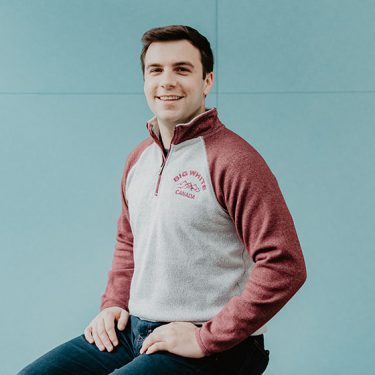
Behind every polished local news broadcast is a high-stakes, deadline-fueled grind that the average viewer never sees. On the latest episode of our Storyteller podcast, we sat down with Evan Schreiber, the morning Live Desk Anchor for KSNV News 3 (NBC) in Las Vegas. Evan’s career has taken him from a small market in Northern California to covering massive global spectacles like the Super Bowl.
Throughout his journey, Evan has developed a deep-rooted passion for community journalism and a proficiency with real-time interactivity. In this episode, he pulls back the curtain on the “trauma bonding” of small-market TV, how he built the Live Desk from scratch, and why local newsrooms must shift their mindsets to survive.
Here are three key takeaways from the conversation:
The Small-Market Journalism Grind
Before anchoring in major metropolitan hubs like Portland, OR and Las Vegas, Evan cut his teeth in Eureka, California, a market of just 60,000 people. In small-town news, you aren’t just an anchor; you are a solo reporter, videographer, and producer all rolled into one. Evan recalls a primitive era where a lack of corporate resources forced his newsroom to adapt creatively just to get on the air.
“It was only 2012… and we’re writing our scripts on Microsoft Word. So you’re writing your scripts on Microsoft Word, you’re setting your rundowns in Microsoft Excel… it was so primitive and yet still so fun. You were there with your colleagues who it was their first job in news as well. It was a trauma bonding scenario and situation.”
Despite the technical limitations, Evan notes that small-market journalism is where you find your voice and learn how to hit deadlines, things that stick with a reporter for the rest of their career.
Transforming the “Live Desk” with Tagboard Interactivity
When Evan transitioned from Eureka to Portland, and eventually Las Vegas, he brought a vision for a highly dynamic, interactive segment called the Live Desk. Rather than sitting stagnant at the main anchor desk, Evan spends his 4:00 AM to 7:00 AM shift tracking breaking updates every ten minutes, pulling in community reactions, and verifying real-time data. A massive part of making this “soup to nuts” operation work seamlessly is Tagboard.
“Utilizing Tagboard, whether it’s the Producer platform or simply just displaying an X/Twitter post or an Instagram reel, it’s just a way to be interactive… On the fly, we are live for three hours… and using the Tagboard platform not only just makes it look clean and pretty, but it’s so easy and user friendly to literally copy and paste, drag and drop and have our viewers get the full visual experience.”
By using a giant touchscreen powered by Tagboard, Evan can bypass slow-moving network feeds, curate breaking social media video safely, and take the pressure off his backend control room team by driving his own graphics and content in real time.
The Digital Shift: Moving Beyond the Linear Priority
The traditional model of local television, where a station focuses entirely on the on-air broadcast and treats the internet as an afterthought, is completely dead. Audiences have fundamentally shifted how they consume information, checking their phones and push notifications long before they ever think to switch on a television set.
“I have felt this way for a long time… that we are very much websites that happen to have TV stations, whereas it used to be the other way around… You cannot get away with doing this job in 2026 and not post to social media frequently and not keep your viewers updated… Live Desk is something that’s going to, I hope, be an opportunity for me to keep innovating and keep presenting and telling stories in ways that can be socially focused and digitally focused.”
To remain relevant, Evan believes newsrooms must break out of their old habits, bring the entire team into a digital-first mindset, and understand that their primary job is to provide immediate, contextual answers to why a story matters directly to a viewer’s life and wallet.